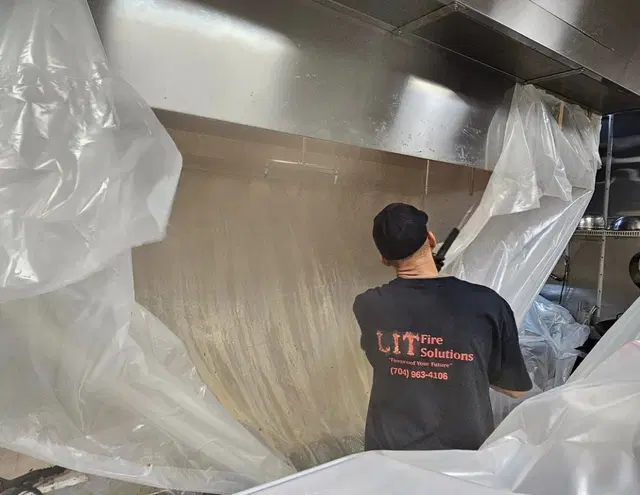
A commercial kitchen produces more than meals. Every day, cooking creates grease, smoke, heat, and airborne particles that move through the ventilation system. Without regular cleaning, these contaminants accumulate inside hood filters, ductwork, fans, and other exhaust components. A neglected system affects kitchen cleanliness, ventilation performance, and fire safety. For restaurants and food-service operations in Charlotte, keeping the exhaust system clean should be part of routine facility maintenance rather than an occasional task.
Choosing professional kitchen hood cleaning in Charlotte, NC helps address grease buildup in areas that are difficult to reach during routine kitchen cleaning. A thorough service focuses on the hood, filters, exhaust fan, and accessible duct surfaces, removing combustible residue before it becomes a larger maintenance concern. For busy Charlotte kitchens, scheduled cleaning also supports a cleaner working environment and helps keep ventilation equipment operating as intended.
Why Grease Buildup Becomes a Serious Problem
Grease does not remain limited to the visible hood surface. Vapors produced during frying, grilling, roasting, and other high-temperature cooking processes travel into the exhaust system. Over time, residue sticks to internal surfaces and becomes increasingly difficult to remove.
Heavy buildup creates several concerns:
1. Greater fire risk: Grease is combustible, particularly when it accumulates near heat and ignition sources.
2. Restricted airflow: Thick residue can interfere with efficient exhaust performance.
3. Unpleasant odors: Old grease trapped inside ventilation components can contribute to persistent kitchen odors.
4. More difficult maintenance: The longer buildup remains, the more demanding the cleaning process becomes.
5. Poorer kitchen conditions: Dirty ventilation components can undermine overall cleanliness.
These problems are easier to manage when cleaning is planned around the kitchen’s cooking activity instead of waiting until the system visibly looks dirty.
Signs Your Kitchen Exhaust System Needs Attention
Your ventilation system often provides clues that cleaning is overdue. Look for grease deposits around the hood and filters, strong lingering cooking odors, visible residue on exhaust components, or declining airflow while cooking.
Another warning sign is rapid grease accumulation on filters after cleaning. This indicates that the system is handling a substantial amount of cooking vapor and requires consistent maintenance. Kitchens that operate for long hours or prepare large volumes of fried or grilled food typically need closer attention than lower-volume operations.
What Professional Hood Cleaning Should Address
Effective cleaning goes beyond wiping the exterior of the hood. The process should address grease deposits throughout accessible portions of the exhaust system, including filters and exhaust fans. Depending on the equipment and system design, technicians use appropriate degreasing methods and cleaning tools to remove hardened residue without damaging ventilation components.
A complete service should also account for baffle filters, access panels in the ductwork, rooftop fan hinge kits, and grease containment at the fan. These components can collect grease and should not be overlooked when evaluating the scope of exhaust-system cleaning.
Proper cleaning should bring accessible, grease-contaminated surfaces to a bare-metal condition. When portions of the system cannot be accessed or cleaned, those areas should be documented in the service report rather than treated as though the entire system was cleaned.
After cleaning, filters should be properly positioned, surfaces checked for remaining buildup, and the work area left in a sanitary condition. Keeping documentation of completed service is also useful for maintenance records and demonstrates that ventilation upkeep is being treated as part of the kitchen’s safety program.
How Often Should Commercial Kitchen Hoods Be Cleaned?
Cleaning frequency should be based on the type and volume of cooking rather than a one-size-fits-all schedule. Charlotte Fire Department’s published interpretation identifies inspection and cleaning intervals of every 3 months for high-volume cooking such as 24-hour cooking, charbroiling, or wok cooking; every 12 months for low-volume, sporadic operations such as churches; monthly for cooking operations using solid-fuel-burning appliances; and every 6 months for other cooking operations. The applicable fire code, system conditions, and authority having jurisdiction should be confirmed before relying on a specific interval.
Regular service also creates the documentation needed to demonstrate that the exhaust system is being maintained. After inspection or cleaning, NFPA 96 documentation provisions call for a certificate or record to be maintained on the premises and an adhesive label on the hood showing service information. A written report should also identify areas that were inaccessible or not cleaned. These records can be important during fire-safety inspections and when demonstrating maintenance history to other parties responsible for the property.
How Charlotte Kitchens Benefit From Regular Cleaning
Routine exhaust maintenance provides practical benefits for restaurants, cafeterias, hotels, and other commercial food-service facilities. A cleaner system supports better airflow, reduces accumulated grease, and makes ongoing maintenance easier to manage.
Scheduling kitchen hood cleaning in Charlotte, NC around your operation’s cooking volume also creates a predictable maintenance routine. Instead of responding to excessive buildup, you can address grease accumulation before it becomes difficult to control. Regular attention protects the condition of the ventilation system while supporting a cleaner and more organized kitchen.
Keep Your Commercial Kitchen Safer and Cleaner
Kitchen exhaust cleaning is an important part of responsible commercial kitchen maintenance in Charlotte, NC. Waiting until grease is obvious or airflow noticeably declines creates unnecessary risk and maintenance challenges.
If your hood, filters, or exhaust system show signs of heavy grease buildup, schedule a professional inspection and cleaning. Establishing a consistent maintenance schedule helps protect your kitchen, employees, equipment, and daily operations while keeping ventilation upkeep on track.